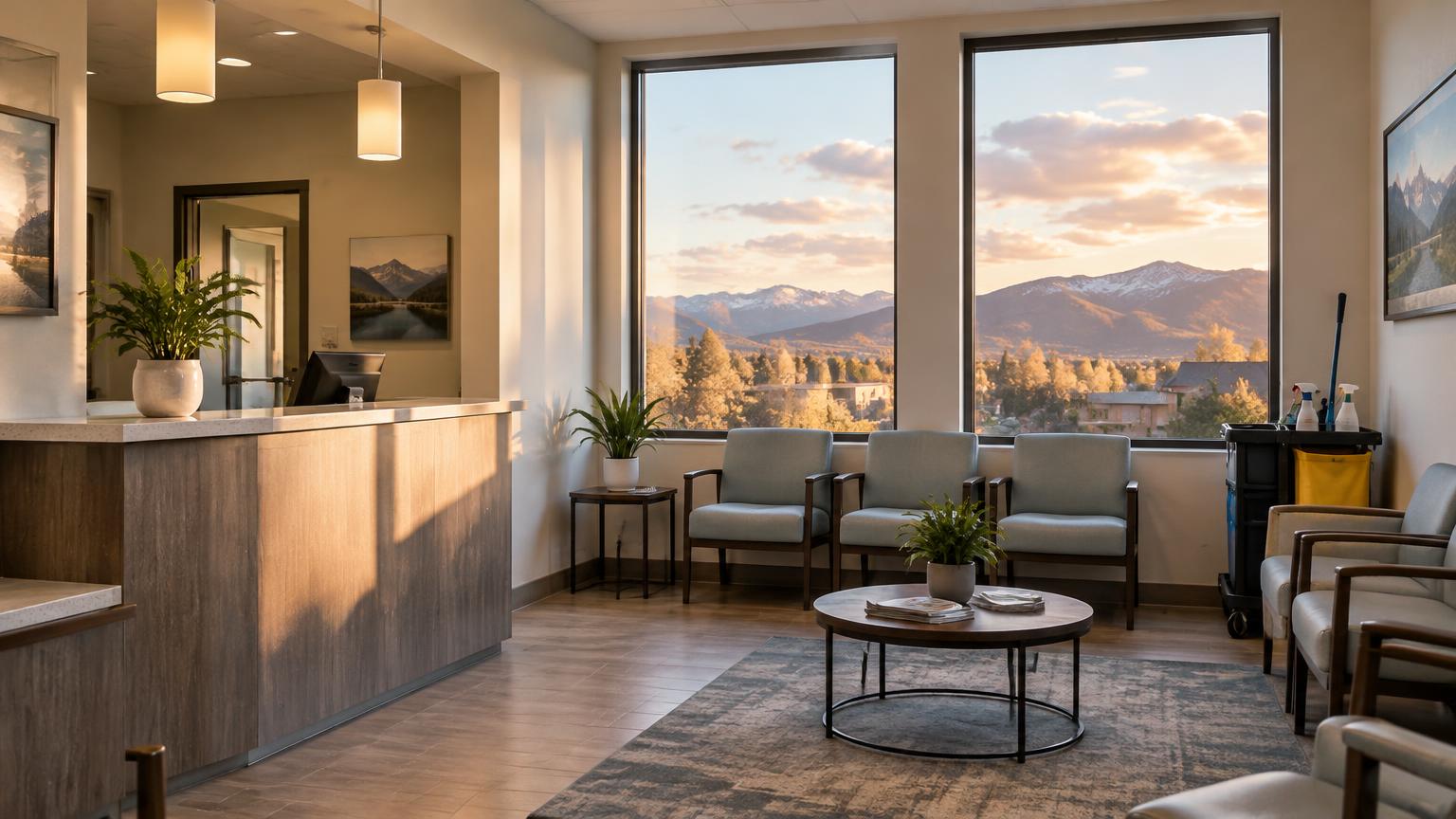
Medical office cleaning in Northern Colorado should follow a written plan for waiting areas, front desks, restrooms and any agreed nonclinical surfaces. Clinic staff supply their own protocols, approved products and restricted-area rules; cleaning services should work within that agreed scope. Simple Shine LLC offers medical and dental office cleaning with appropriate procedures tailored to each practice.
Late September is a practical time to review the routine before colder weather brings more traffic through enclosed waiting rooms. The Cleaning Tips hub covers general cleaning decisions. A clinic plan also needs clear boundaries for patient spaces, staff duties and building access.
What does medical and dental office cleaning include?
Medical and dental office cleaning can cover entry floors, waiting-room furniture, reception counters, restrooms, staff break rooms and other surfaces named in the written agreement. Exam and operatory rooms need a clinic-approved scope, not assumptions carried over from ordinary offices. Ask who supplies products and who handles any clinical equipment before scheduling.
Start with a walkthrough of the actual practice. Note patient-facing spaces, staff-only rooms, entry points and surfaces with manufacturer instructions. A small office with one reception desk has different needs from a larger dental practice with several operatories. The cleaning plan should specify what the team can touch, what clinic staff handle between patients and what remains off limits.
Simple Shine LLC is family owned, licensed and insured. It uses eco-friendly products where appropriate for the surface, but clinics should share their approved products and own protocols. An environmental cleaning agreement does not replace clinical training, regulatory duties or the practice's infection control program. The general office cleaning guide covers shared workspaces outside the clinical context.
How is clinic cleaning different from regular office cleaning?
A clinic needs more explicit room boundaries and product instructions than a typical office. Reception and staff areas may look familiar, but exam or operatory spaces are governed by the practice's own protocols. The comparison below is a planning guide, not a clinical standard. Agree on each task during the walkthrough.
| Area | Regular office focus | Medical or dental office planning |
|---|---|---|
| Waiting room | Visible surfaces and floors | Agree on chairs, tables, touch points and product selection |
| Exam or operatory rooms | Not usually present | Follow the clinic's written scope; staff retain clinical tasks |
| Restrooms | Fixtures, supplies and floors | Confirm frequency and approved methods with the practice |
| Front desk | Countertops and shared areas | Protect paperwork, devices and patient information |
| Break room | Counters, sink and floor | Separate food spaces from clinical supplies and waste |
The clinic decides whether any room is restricted, who prepares it for a cleaner and how staff document their own tasks. Do not let a cleaning plan imply that a service can handle sharps, medical waste or clinical equipment by default. Those responsibilities should be assigned explicitly to the appropriate people under the practice's procedures.
Some offices also have building-specific requirements such as key control and alarm codes. Identify the person who can approve changes to the cleaning scope. For a separate look at how dust from renovation differs from everyday office work, see the post-construction cleaning guide.
What belongs on a clinic cleaning checklist?
A clinic cleaning checklist should name the rooms, surfaces, approved methods and person responsible for each task. Start with public and staff areas, then document any permitted work in exam or operatory rooms separately. This avoids gaps and keeps the cleaning team from guessing about sensitive equipment, records or waste.
- Entry and waiting area: Clear approved surfaces, wipe agreed touch points and care for floors and seating according to material instructions.
- Front desk: Clean accessible counters without moving patient records, payment equipment or protected devices.
- Exam and operatory rooms: Follow only the clinic-approved written tasks and room sequence. Confirm what staff complete before and after service.
- Restrooms: Address fixtures, mirrors, sinks, dispensers and floors under the practice's product guidance.
- Staff break room: Wipe accessible counters and sink, handle ordinary trash as agreed, and clean the floor.
- Closeout: Confirm doors, lights and alarm steps, then report anything outside the cleaning scope to the designated contact.
Keep a current list of surface care instructions and restricted supplies. If something changes, such as a new chair fabric or remodeled room, update the plan. Avoid promising a result that ordinary cleaning cannot verify. The clinic should decide its own inspection and documentation process.
How often should a medical or dental office be cleaned?
Cleaning frequency depends on patient traffic, room use, the practice's protocols and who handles tasks during operating hours. A clinic may need some surfaces addressed by staff between visits while a service handles agreed after-hours work. Decide frequency with the clinic manager rather than applying a universal office schedule.
Walk through a normal week, not just a quiet afternoon. Which spaces see visitors throughout the day? Which restrooms are shared? Does a staff break room see heavy use? Write down the service frequency for each area and who will review the result. A recurring plan can change when hours or room use changes.
In Northern Colorado, seasonal dust and grit can affect entries as fall turns toward colder weather. Entry mats and floor care may need a different rhythm from interior desks. The Greeley local cleaning guide discusses the dust and office conditions that make a local plan useful.
Can medical and dental office cleaning happen after hours?
Evening and weekend cleaning is available for commercial spaces, subject to availability and the agreed scope. An after-hours clinic plan should include entry instructions, alarms, secure areas and an emergency contact. Give the team enough information to work without interrupting patients or exposing records and equipment.
Ask who closes the practice and who opens it the next day. Do not assume the cleaning crew will rearrange supplies, reset clinical rooms or manage patient documents. If a practitioner needs access during an evening clean, set a room order so people can work safely around one another. Confirm any change in hours before the next visit.
For nonclinical workplaces, office cleaning services may be the simpler fit. If your practice has clinical spaces, the medical and dental service is the better starting point for a scoped walkthrough.
How is commercial cleaning priced for a clinic?
Simple Shine's general commercial pricing lists a small office plan starting at $219 per visit and a medium office plan starting at $419 per visit. These are office starting points, not fixed clinic rates. Pricing may vary based on the condition of the space. Check the published pricing page and arrange a free initial walkthrough for a tailored quote.
Square footage, number of rooms, visit frequency and practice-specific instructions all affect the work. Bring a floor plan if available and explain which rooms the cleaning team can enter. Ask for an itemized scope and clarify supplies, scheduling and who handles regulated materials. A quote built around the actual practice is more useful than trying to apply a general office starting price to every clinic.
Ready to define a plan for your practice? Request a clinic cleaning walkthrough with Simple Shine LLC in Northern Colorado, or call 720-491-1325.
Frequently Asked Questions
Does a clinic cleaning plan replace our own infection control procedures?
No. The clinic remains responsible for its clinical protocols and regulated tasks. Share your written procedures, approved products, restricted areas and staff responsibilities before agreeing on a cleaning scope. Ordinary environmental cleaning is not a promise of clinical compliance or infection prevention.
Can you clean a dental office after patients leave?
Evening and weekend cleaning is available. Describe your operating hours, closing routine, alarm and access requirements during a walkthrough. Scheduling depends on the agreed scope and team availability, so confirm the actual time before changing your staff's closing plan.
What about sharps and medical waste?
Clinic staff should manage sharps, medical waste and other regulated materials under the clinic's own procedures. Identify those materials and restricted areas in the walkthrough. Do not assume a general cleaning quote includes collection, treatment or disposal of regulated waste.
Do you serve medical and dental offices outside Fort Collins?
Simple Shine serves Fort Collins and the listed Northern Colorado service towns, including Greeley, Loveland, Windsor, Timnath and Erie. Share the office address when you request a walkthrough so service availability and access can be confirmed.
How much does medical office cleaning cost?
The commercial pricing page lists small office plans starting at $219 per visit and medium office plans starting at $419 per visit. Those are general office starting prices, not a guaranteed clinic quote. Pricing may vary based on the condition of the space. A free initial walkthrough helps define your scope.
Can we request a particular product or cleaning sequence?
Yes. Bring your clinic's approved-product list, surface instructions and preferred room sequence to the walkthrough. The team can discuss an appropriate procedure and written scope. If a task needs specialized clinical training or equipment, identify it as a clinic responsibility rather than assuming it is covered.